
And It’s Not Too Late to Enjoy It
A quick note before we begin: if you’ve been reading music for a while, some of this will feel like review. Stick around anyway — sometimes hearing something familiar explained a new way is exactly what makes it click. And more advanced topics are on the way. (If you’re new, stay to the end — there’s a short quiz that gives you a free handout matched to where you are right now.)

Have you ever looked at a piece of sheet music and thought, “I wish I understood what all those notes mean”?
Maybe you took piano lessons as a child but never quite understood what you were playing.
Perhaps someone told you that you didn’t have a natural talent for music.
Or maybe you’ve always dreamed of playing an instrument but felt that you missed your chance.
If any of this sounds familiar, I have some wonderful news for you.
You’re not too old to learn music theory. And you certainly haven’t missed your opportunity to enjoy music!
Music Doesn’t Have an Expiration Date
Somewhere along the way, many adults picked up the idea that music is something you have to learn when you’re young.
But music isn’t reserved for children, professional musicians, or people who were seemingly born knowing how to play an instrument.
Music belongs to everyone.
And understanding how music works can make your musical experience even more enjoyable.
Whether you’re returning to the piano after 30 years, singing in a choir, learning guitar, or simply wanting to understand those mysterious dots and lines on the page, you can begin right where you are.
You don’t have to know everything.
You just have to be willing to learn one thing at a time.
Why Music Theory Can Feel So Intimidating
Let’s talk about something that doesn’t get discussed enough: the fear of learning music as an adult.
Maybe you remember a teacher who moved too quickly.
Maybe you struggled to remember which notes belonged on which lines.
Maybe you were afraid to ask questions because you thought everyone else already understood.
Experiences like these can leave lasting impressions.
But here’s something I want you to remember:
Struggling with music theory in the past doesn’t mean you’re incapable of understanding it today.
It may simply mean you need a different explanation, a slower pace, or someone who will patiently guide you through the process.
There’s no prize for learning music theory the fastest!
Music Theory Is a Tool, Not a Test
One of the biggest misconceptions about music theory is that it’s a collection of complicated rules you have to memorize.
I prefer to think of it as a way of understanding the language of music.
Imagine opening a book written in a language you don’t understand.
At first, the letters and words might seem confusing.
But as you begin recognizing patterns and understanding what those symbols mean, something wonderful happens.
The page starts to make sense.
Music works in a similar way.
Those notes on the staff aren’t there to confuse you. They’re there to communicate something beautiful.
When you begin understanding what you’re seeing, reading music can feel less like solving a puzzle and more like discovering a new language.
And that can bring real joy to your musical experience.
Let’s Try Something Simple Together
Ready for a tiny music theory victory?
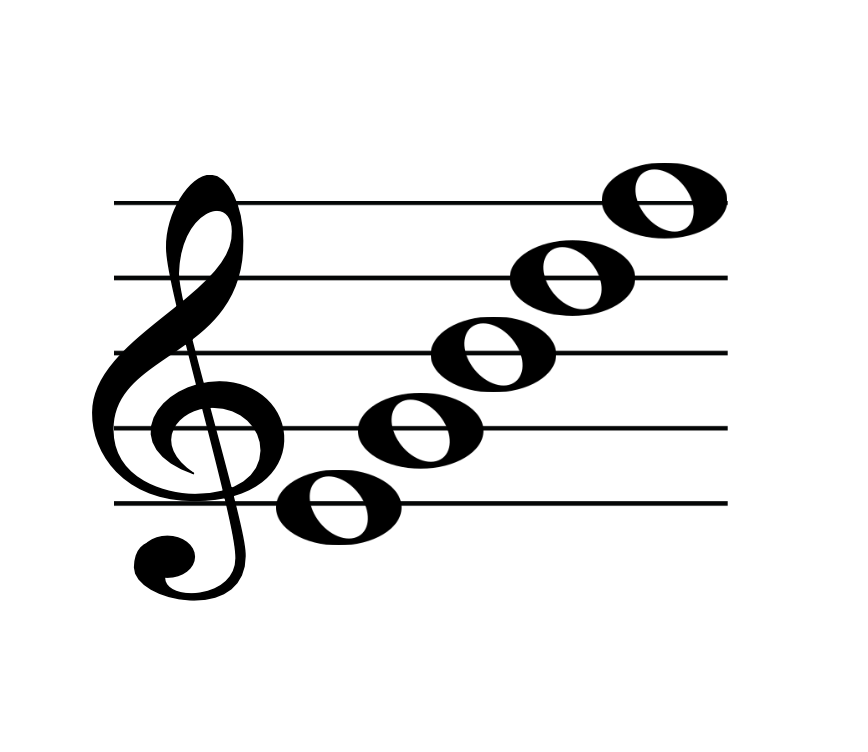
Let’s start with just five notes in treble clef.
The treble clef is commonly used for higher-pitched notes, including many melodies and the right-hand part of piano music.
Look at the five lines of the musical staff.
The notes that sit directly on those lines, from bottom to top, are:
E – G – B – D – F
That’s it!
You don’t have to learn every note today.
Start by noticing where E sits on the bottom line and where F sits on the top line.
Now try saying the five note names slowly, from bottom to top.
Notice something? Each line note is a skip from the one before it. Step, skip, repeat — those three moves will help you read almost anything on the staff.
Congratulations! You’ve just practiced a fundamental music-reading skill.
You might not feel like a music theory expert yet, but you’ve taken a meaningful step forward.
And that’s worth celebrating.
You Don’t Have to Learn Everything at Once
One of the most encouraging things about learning music is that understanding builds gradually.
You learn one note.
Then another.
You begin recognizing patterns.
Suddenly, something that once looked completely unfamiliar starts to make sense.
The goal isn’t perfection.
The goal is understanding, confidence, and enjoyment.
And if you get confused along the way?
That’s okay, too.
Questions are welcome. Mistakes are part of learning. And having encouragement and support can make the journey much more enjoyable.
Your Musical Journey Is Still Being Written
Maybe you haven’t touched an instrument in years.
Maybe you’ve never learned to read music.
Or maybe you’ve been playing for a long time but still feel unsure about music theory.
Wherever you are in your musical journey, I want you to know something:
You deserve to experience the joy of understanding music.
You don’t have to let past experiences decide what’s possible for you now.
Start small. Stay curious. Celebrate your progress.
And remember, it’s never too late to make music a more confident and joyful part of your life.
Let’s Keep Learning Together!
I’d love to know: What’s one thing about reading music or music theory that you’ve always wanted to understand? When you take the quiz below, there’s a spot for notes — tell me there. I read every one.
Curious where you’d start? Take my free 8-question music theory quiz and get a handout matched to where you are right now.
Let’s make music theory something to enjoy rather than something to fear!